The Seedling Collection
Literary history sometimes appears before us as a grand tapestry a la Bayeux, every detail upon it judiciously woven so that each figure is proportionate to his or her worth, setting for us thereby the ideals of our attention and taste. But we must not forget its maker. Fame is hardly so fair a weaver, chimerical and capricious bitch-goddess that she is — so much so that even now, like Penelope, she unweaves the cloth by night and reweaves anew by day, holding her suitors in fateful abeyance. So it happens that many in some mad moment have made it their life’s ambition to contribute to the pantheonic Canon, howsoever they conceived it, and the greater part, whether by lack of friends or the faculty, have not carried their name far beyond earshot of their eulogies. In order to honor that mass of Canon-fodder, I propose a memorial: the Seedling Collection — a collection made to highlight the vulnerability and contingency of literary germination, comprised primarily of works written by those who, at the time of writing, had not yet bloomed with the brilliant colors of literary destiny or by those who never have.
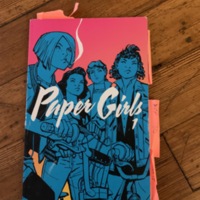
My friend’s book ought to occupy a special position within the collection since we do not yet know what his fate will be. As for the rest, some of the texts will be the early works of various prominent authors, such as Eliot’s Harvard Advocate poems and Wallace’s The Broom of the System; others will be the works of authors who have been neglected by history, whether justifiably or not. I cannot currently provide specific examples of the latter for obvious reasons, but we may select them from the same approximate pool as that of the former; for instance, we may look for neglected works among the literary attempts of Eliot’s peers at Harvard. The collection should also include short biographies of each of the prominent authors, so that readers may grasp the importance of fortuitous collaboration, encouragement, and resources in literary development. It may be supported any general book fund, e.g. Henry L. Pierce Fund, or one devoted to English literature, e.g. Nathaniel Lauriat Book Fund in English Literature.
Hopefully, this collection — unprecedented as far as I know (though I know little) — will have a sobering effect on prospective authors as well as for the creatively ambitious in general; it should help them adjust their expectations to the rule rather than to the exception and more clearly articulate for themselves what it means to possess artistic ability and attain artistic success.